Zoho Founder Sridhar Vembu: AI as the Ultimate Augmentor in Software Development
The intersection of artificial intelligence and software development is a topic of intense discussion, sparking both excitement and apprehension across the tech landscape. At the heart of this evolving conversation is Sridhar Vembu, the visionary founder and CEO of Zoho, a company renowned for its comprehensive suite of business software. Recently, Vembu shared profound insights following an internal tech town hall focused on AI-generated code, revealing a much clearer understanding that offers a balanced and forward-looking perspective for the industry.
For many, the advent of AI tools capable of generating code has raised questions about the future of human programmers. Would AI eventually render coding jobs obsolete? Or would it simply become another powerful tool in the developer’s arsenal? Vembu himself approached the topic with an open mind, eager to explore the practical implications and real-world efficacy of these new technologies within his own engineering teams.
The pivotal moment came during an extensive internal town hall meeting where Zoho’s engineers demonstrated the capabilities and limitations of AI-generated code firsthand. This practical, hands-on exposure was critical. It moved the discussion from theoretical conjecture to tangible experience, allowing Vembu to witness the technology’s performance in real development scenarios. The session provided invaluable clarity, shifting his perspective from initial contemplation to a firm, well-informed stance.
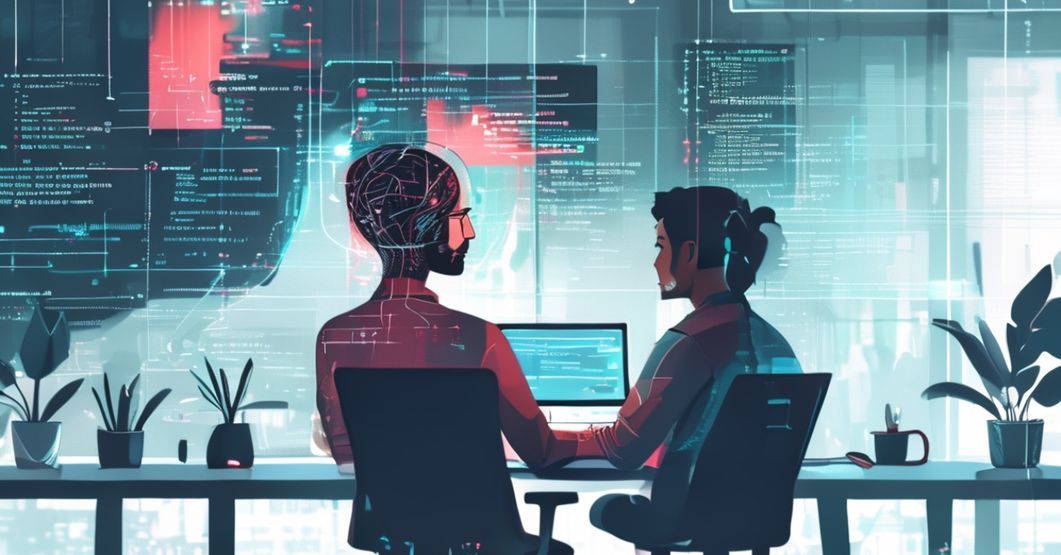
Vembu’s key takeaway is unequivocal: AI’s true power in coding lies in augmentation, not replacement. He likens AI to an incredibly efficient ‘junior programmer’ or ‘intern’ – one that excels at handling repetitive, boilerplate tasks and mundane coding chores. This frees up human developers to focus on higher-order thinking: architectural design, complex problem-solving, creative innovation, and strategic oversight. AI can generate code snippets, refactor existing code, or even write entire functions based on prompts, but it still requires human intelligence to guide, validate, and refine its output.
This perspective heralds a significant shift in the role of software developers. Instead of spending hours on routine coding, engineers can now dedicate their intellect to more challenging and rewarding aspects of software creation. Their new mandate involves defining clear requirements for AI, reviewing the generated code for correctness and efficiency, debugging, and ensuring the final product aligns with the broader system architecture and business goals. The emphasis moves from mere code production to strategic thinking, system design, and the art of problem decomposition.
Vembu’s insights paint an optimistic picture for the future of software development. It’s a future where human ingenuity is amplified by AI’s processing power, leading to faster development cycles, improved code quality for foundational tasks, and more robust applications. This collaboration also underscores the ongoing importance of continuous learning for developers, who must adapt to working alongside AI, leveraging its strengths while mitigating its weaknesses. The human element – creativity, critical thinking, and ethical considerations – remains indispensable.
Sridhar Vembu’s journey to a ‘much clearer understanding’ of AI-generated code offers a valuable roadmap for the tech industry. It underscores that while AI is a transformative force, its ultimate purpose is to serve as a powerful assistant, enhancing human capabilities rather than diminishing them. For Zoho and the broader tech community, this means embracing AI not as a competitor, but as a collaborative partner, paving the way for a more innovative and efficient future in software engineering.
