AI in Construction: Revolutionizing Site Intelligence and Project Delivery
The construction industry, often seen as traditional, is undergoing a remarkable transformation. At the heart of this evolution is Artificial Intelligence (AI), a powerful technology rapidly reshaping how projects are managed, sites are operated, and decisions are made. AI isn’t just a futuristic concept; it’s a practical tool delivering tangible benefits right now, making construction safer, smarter, and significantly more efficient.
Construction sites are complex ecosystems, brimming with data from various sources: machinery, sensors, drones, worker movements, and project schedules. Traditionally, processing this vast amount of information has been a monumental challenge, often leading to delays, cost overruns, and missed opportunities. This is where AI steps in. By leveraging advanced algorithms and machine learning, AI can sift through terabytes of data in real-time, identifying patterns, predicting potential issues, and providing actionable insights that human analysis simply cannot match.
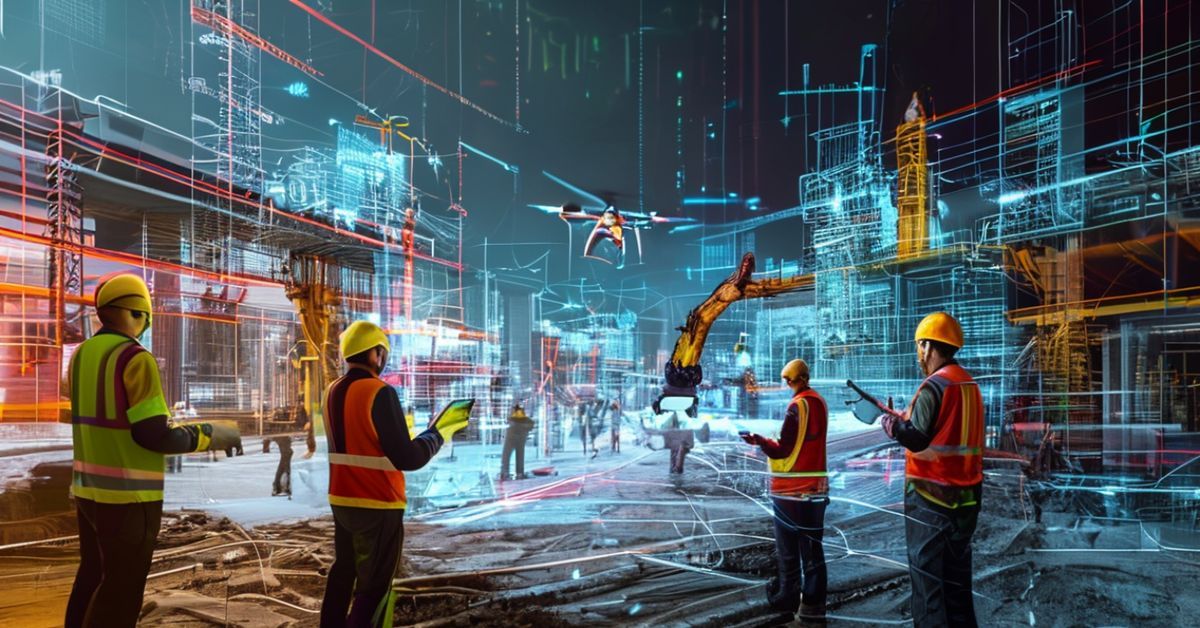
One of AI’s most impactful applications is in enhancing site intelligence. Imagine a construction site where equipment malfunctions are predicted before they happen, allowing for preventative maintenance and avoiding costly downtime. AI-powered cameras can monitor safety protocols, detect hazards, and even track material flow, ensuring everything is in its right place at the right time. Drones equipped with AI can conduct rapid site surveys, creating detailed 3D models and progress reports, offering an unprecedented level of oversight and accuracy.
Beyond the physical site, AI is revolutionizing project delivery. From the initial planning stages, AI can optimize resource allocation, generate more accurate cost estimates, and create highly efficient schedules by analyzing historical data and current project parameters. During execution, AI tools can track progress against the plan, flag deviations, and suggest corrective actions, ensuring projects stay on track and within budget. This intelligent oversight leads to better decision-making, reduced waste, and ultimately, higher quality outcomes.
The benefits extend further to worker safety and environmental sustainability. AI can analyze site conditions to identify risks, alert workers to potential dangers, and even monitor fatigue levels. From an environmental perspective, AI can optimize energy consumption on site, minimize material waste through precise planning, and help in adhering to stricter environmental regulations, contributing to greener construction practices.
In conclusion, AI is not merely an add-on; it is becoming an integral part of the modern construction landscape. By transforming raw data into actionable intelligence, it empowers project managers, engineers, and site workers with the tools they need to overcome traditional challenges. The future of construction is intelligent, data-driven, and powered by AI, promising a new era of efficiency, safety, and innovation for the built environment.
