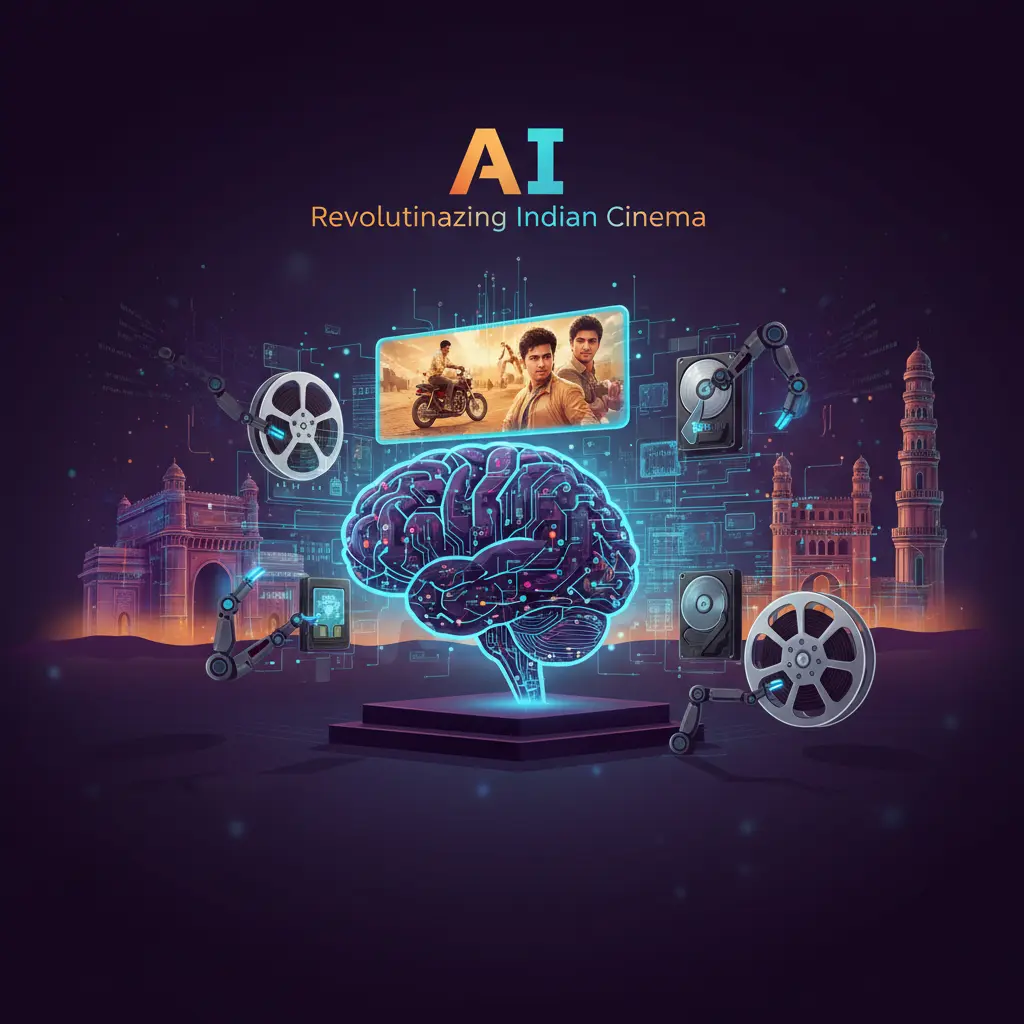
Why Indian Cinema is Leading the AI Revolution in Filmmaking
The magic of cinema has always captivated audiences, transporting them to different worlds and evoking powerful emotions. But what if the very fabric of that magic is being woven by something equally powerful and increasingly intelligent? Welcome to the new era of Indian cinema, where Artificial Intelligence (AI) isn’t just a futuristic concept but an integral, everyday tool shaping the industry from script to screen. A recent article by the BBC, “Why Indian cinema is awash with AI,” sheds light on this transformative trend, revealing how technology is revolutionizing one of the world’s most prolific film industries.
The ‘Why’ Behind the AI Wave
India’s film industry, a behemoth by any measure, produces thousands of films annually across multiple languages. This sheer volume, coupled with the desire for ever more spectacular visual effects and efficient production, creates a fertile ground for AI adoption. The BBC article highlights several key drivers:
- Cost-Efficiency: AI tools can drastically reduce the time and budget spent on labor-intensive tasks like visual effects (VFX) and post-production, making ambitious cinematic visions more attainable for a wider range of productions.
- Speed and Scale: The rapid pace of filmmaking in India demands quick turnaround times. AI accelerates processes like editing, sound design, and even pre-visualization, allowing studios to produce more content faster.
- Language Barriers: With films released in numerous regional languages, AI-powered dubbing and voice synthesis are game-changers. They allow for seamless localization, expanding a film’s reach to diverse linguistic audiences without significant human re-recording efforts.
- Visual Enhancement: From creating elaborate digital sets and crowd duplication to de-aging actors or enhancing existing footage, AI-driven VFX tools offer unprecedented control and realism, elevating the visual grandeur of films.
AI in Action: Beyond the Hype
The application of AI in Indian cinema is not theoretical; it’s happening now. Imagine an actor seamlessly de-aged for a flashback scene or a historical epic requiring thousands of background characters that are generated digitally rather than hired. AI is making this a reality. It’s used to generate convincing crowd scenes, create complex digital environments that would be prohibitively expensive to build physically, and even assist in script analysis to predict audience reception.
Furthermore, the article emphasizes how AI’s capability in voice cloning and automated dubbing is transforming post-production workflows. This not only saves time and money but also opens up new avenues for content distribution, allowing a single film to quickly reach audiences speaking Bengali, Tamil, Telugu, Hindi, and more, all with high-quality localized audio.
Key Takeaways for the Future of Film
The embrace of AI by Indian cinema offers compelling insights into the future of global filmmaking:
- Democratization of Filmmaking: Advanced tools, once exclusive to Hollywood blockbusters, are becoming accessible, enabling filmmakers with smaller budgets to realize grander visions.
- Evolving Skill Sets: While some fear job displacement, the trend points towards a shift where creative professionals will collaborate with AI, requiring new skills in prompt engineering and AI tool management.
- Enhanced Audience Experience: AI contributes to more immersive visuals, faster content delivery, and greater linguistic accessibility, ultimately enriching the viewer’s experience.
Conclusion: India Leading the AI Cinematic Frontier
Indian cinema stands as a vibrant testament to the power of AI to innovate and expand creative boundaries. Far from diminishing the human element, AI is acting as a powerful co-creator, amplifying the industry’s ability to tell diverse stories on an unprecedented scale. As AI continues to evolve, its role in filmmaking will only grow, with India’s pioneering efforts likely paving the way for how the rest of the world approaches cinematic production in the digital age. It’s an exciting time where technology and storytelling converge to redefine the art of film.
